Exploring Traditional Dishes and Why They Matter
“Food is our common ground, a universal experience.” – James Beard
I love the simplicity of that quote. The more I travel, the truer it feels.
Everywhere we go, people gather around food. But what interests me most is how certain dishes become part of the identity of a place.
Was the dish shaped by a nearby port? Did spices arrive along an ancient trade route? Was it created from an abundant harvest, a cheap cut of meat, or simply the need to make something filling from very little?
I am drawn to those stories.
Perhaps that is why I continue to seek out traditional dishes when I travel. They offer more than something to eat. They provide a glimpse into how people lived, adapted, and created comfort from what they had.
“Food is everything we are. It’s an extension of nationalist feeling, ethnic feeling, your personal history, your province, your region, your tribe, your grandma. It’s inseparable from those from the get-go.” – Anthony Bourdain
From Peasant Food to Refined Classics
I think I have always been drawn to working-class dishes.
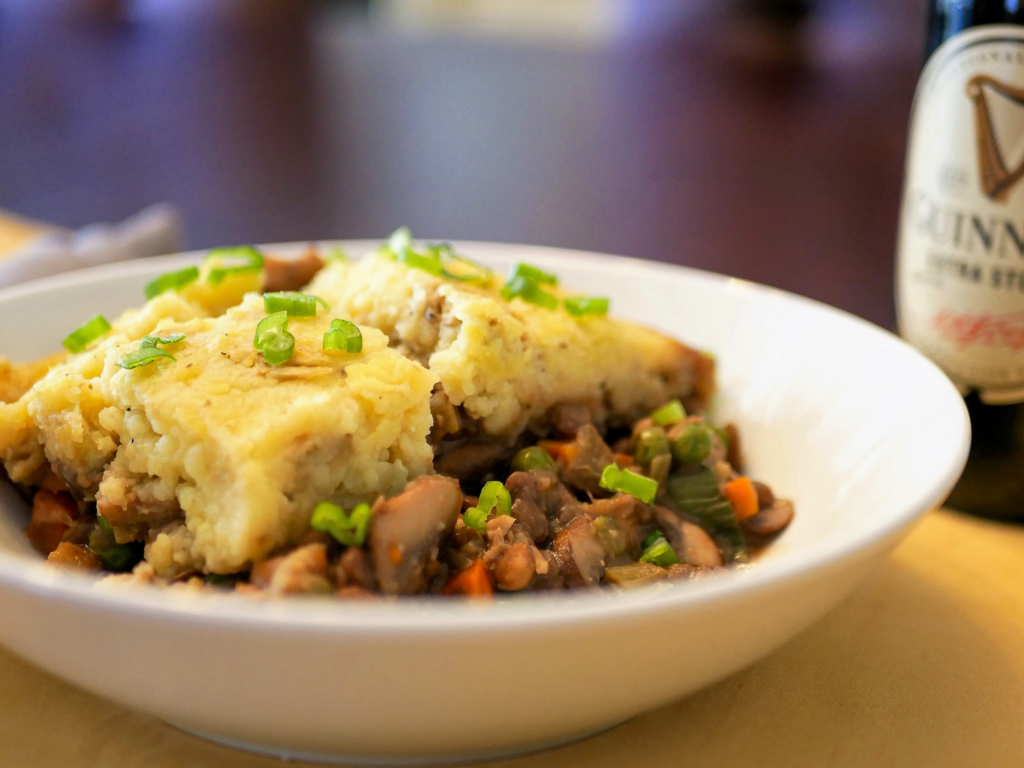
When I was a kid, I loved a hot shepherd’s pie on a cold Vermont evening. Humble with working-class roots, it was often made from leftovers and inexpensive ingredients. Nowadays, I occasionally see it on the menu at Irish Pubs. But for the price they charge, I hope it isn’t from leftovers!
Don’t get me wrong. I love a Chateaubriand or Beef Wellington. But it’s the food of ordinary people that tends to evoke an emotional connection with me to an area.
Every dish has a story, and I love discovering it.
Food is Part of the Journey
I usually spend as much time planning the foods I want to try while traveling as I do the activities. I plan and plot my journey of the museums, monuments, and historical sites.
I do the same with food, usually with a sense of adventure.
It may be that the dish has a personal connection with me. Or my interest is piqued by the uniqueness of the dish. Sometimes I am left to wonder why such a simple dish became so popular. And every now and then, I learn that what I thought was “fancy” came from very humble beginnings.
Amsterdam
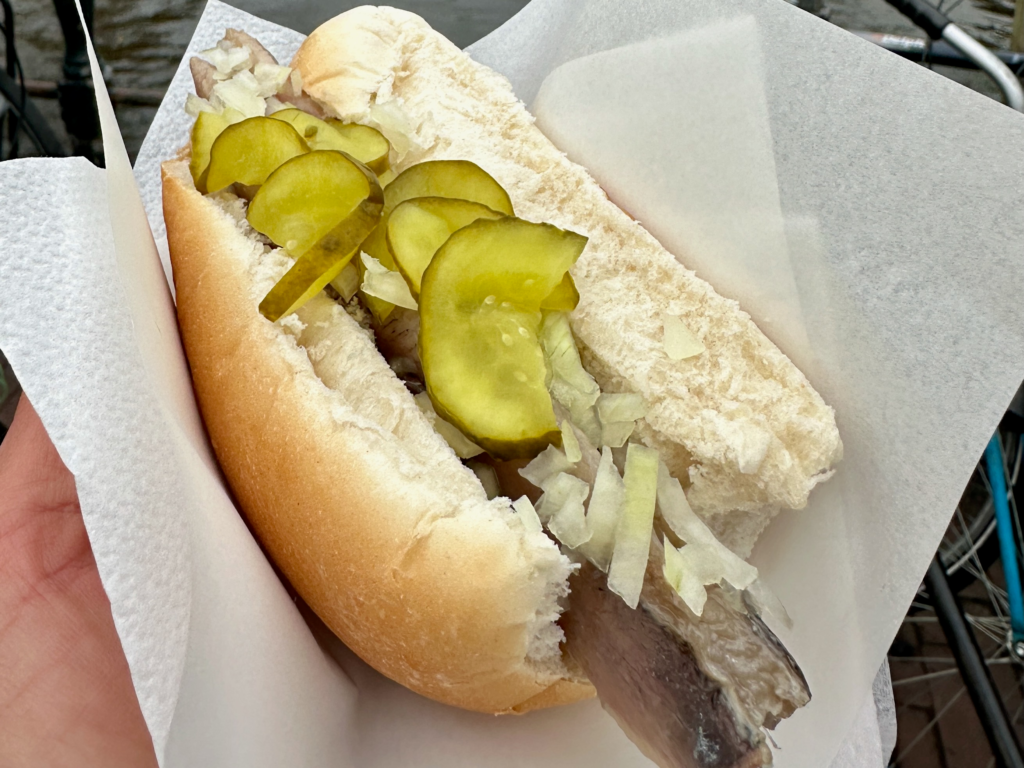
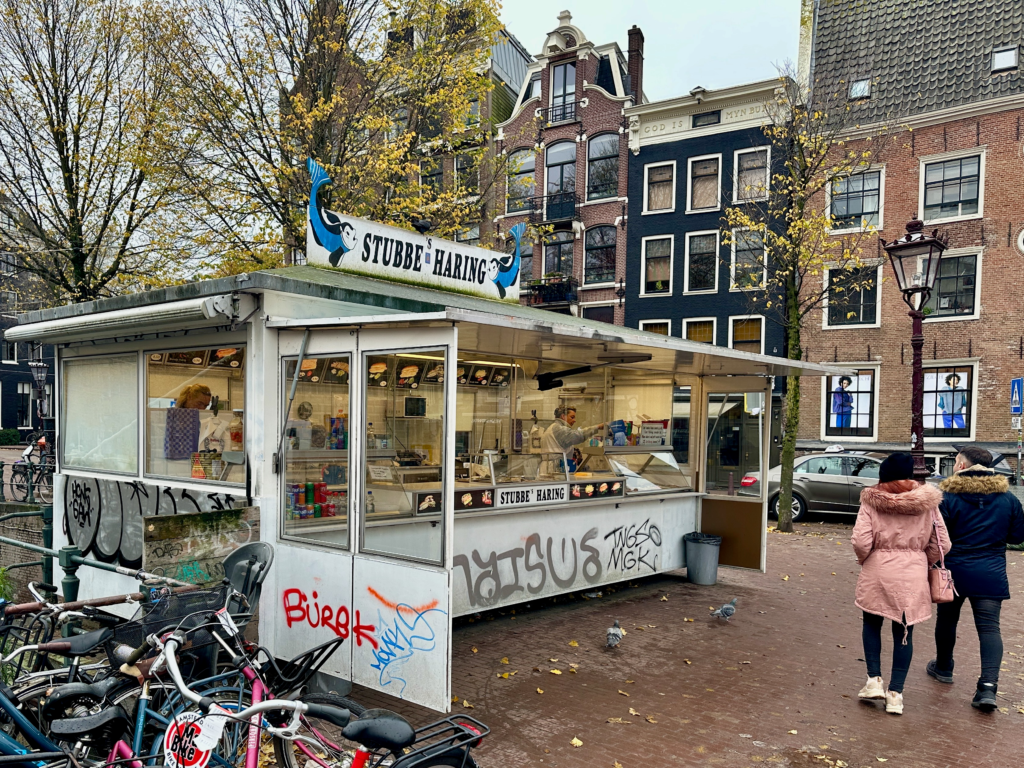
When I was in Amsterdam, I trudged through slush and puddles to visit a local fish stand, Stubbe’s Haring, to try pickled herring on a hot dog roll.
As my wife and stepdaughter shopped, I waited in line with several others in the frigid conditions to experience this interesting combination.
Why did I want to try this seemingly odd dish?
It was a connection I had with my grandmother. She would serve me pickled herring as a snack when I’d visit.
Some grandmothers would have made chocolate chip cookies or brownies when their grandson would come over. My grandmother would pull out a large jar of pickled herring.
It was a sentimental moment on the streets of Amsterdam that afternoon—fond memories of my grandmother and that strange tradition we shared.
And yes, I enjoyed every (strange) bite as I walked back to the shops to rejoin the family.
Florence, Italy
In Florence, Italy, I found a sandwich I was determined to try.
I snuck away from my wife and found a food stand that only served this traditional street food of Florence, lampredotto.
Why did I have to sneak away from her? Because there was no way she would have watched me eat a sandwich made from the fourth stomach of a cow.
The sandwich dates back to the 15th century. Merchants pushing wooden carts would sell the sandwich to the working-class Florentines. Today, the carts have been replaced with food stands. But the sandwich continues to be enjoyed by Florentines and tourists alike.
The crusty roll was stuffed with the meat (I guess the stomach is considered meat) and then the sandwich was dunked in the braising liquid. I can’t remember if the green sauce was spooned on top before or after the plunge into the broth, but either way, I was told it was part of the experience.
The vendor wrapped it in paper and handed it to me.
Before I took the first bite, the juices were already running down my hands and arms. Holding tightly so the sandwich wouldn’t fall apart, I hurriedly stuffed it into my mouth.
There were not enough paper napkins to contain and clean the mess. I was embarrassed, to say the least.
And though it was incredibly messy, it was one of the most delicious foods I enjoyed in Florence.
But the sandwich came with consequences. My wife didn’t let me near her for days!
Barcelona
When we were in Barcelona, I found this popular dish that seemed almost too simple.
Pa amb tomàquet is a rustic bread rubbed with garlic and a ripe tomato. The dish is completed with a drizzle of olive oil and a sprinkle of sea salt. That’s it.
Just like paella, it seemed to be on every menu. But why?
The dish came from rural Catalonia. The area had an abundance of tomatoes during the summer and hard, stale loaves of rustic bread that needed to be softened. Pa amb tomàquet was the solution, bringing new life to the old bread.
We stopped at a small cafe for breakfast and I finally ordered pa amb tomàquet.
I took a bite while sipping an Americano. I did not care for it.
If I try it again, it will be with a glass of red wine, even if it is at breakfast!
Paris
Lastly, did you know that french onion soup and beef bourguignon were once peasant foods? I grew up thinking these were fancy dishes, served only at fancy restaurants.
Who would have known these dishes came from such humble beginnings?
Bouillon is the name given to eateries created to feed the working-class laborers, offering quality, hearty meals at affordable prices.
My favorite restaurant in Paris is Bouillon Pigalle, an establishment I found several years ago when searching for the best beef bourguignon in Paris. Now I understand the connection of the restaurant’s name with the menu it offers.
Today, Bouillon Pigalle continues the tradition. High quality, traditional dishes, served to people from all walks of life coming together over a meal. Still at an affordable price.
Recently I enjoyed the restaurant’s oeufs mayonnaise, which was simply hard-boiled eggs with mayonnaise on top. Simple, but delicious!
I fully expect that someday a fancy, upscale restaurant will have this on their menu. They will call it a deconstructed deviled egg and charge a premium price for it!
Let Your Mouth Be Your Guide When You Travel
Try the dish that reminds locals of childhood. Order something made from an ingredient you would normally avoid. Taste the simple food that grew from necessity, abundance, or ingenuity.
You may love it. You may wonder how anyone could possibly enjoy it. Either reaction can become part of the experience.
The point is not to prove that you have an adventurous palate. It is to understand a little more about the place you are visiting and the people who call it home.
Museums and monuments tell us about rulers, wars, architecture, and major events. Traditional food often tells us about everyone else—the families, laborers, farmers, fishermen, and grandmothers whose daily lives shaped the culture.
So when you travel, look around. Listen. And eat.
You may discover that one of the most meaningful ways to experience a place is already sitting on the plate in front of you.